Cockroach control in Singapore
Seeing the odd cockroach in a Singapore home isn't unusual: they come in through floor traps, pipes and the gap under the main door, especially after heavy rain. Seeing them regularly, or seeing small ones in the kitchen during the day, usually means they're living and breeding indoors, and a supermarket spray won't reach where they hide.
Tell us about the problem and we'll pass it to a partner pest-control firm. The firm inspects, explains what it has found, quotes, and carries out the treatment.
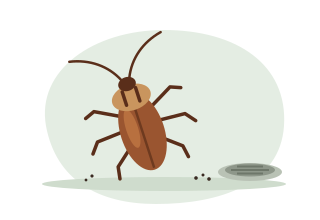
What a cockroach problem looks like
- Small light-brown cockroaches, often with two dark stripes behind the head, in the kitchen, around the fridge and stove or inside cabinets. These are usually German cockroaches, which breed indoors.
- Large reddish-brown cockroaches coming up through floor traps, bathroom drains or from the refuse chute area. These are usually American cockroaches, which live in drains and sewers.
- Cockroaches out in daylight. They hide during the day, so seeing them then often points to a larger population.
- Droppings like ground pepper or coffee grounds along cabinet hinges, drawer corners and behind appliances.
- Egg cases, small brown capsules, tucked into cracks, behind appliances or inside cabinets.
- A musty, oily smell in the cupboards where they hide.
The species matters because it changes the treatment. The firm will usually ask how big they are and where you see them, so a photo helps.
Treatment options for cockroaches
The partner firm recommends a treatment after seeing the property. These are the methods it's likely to talk you through.
Gel baiting
Small dots of bait gel go into cracks, hinges and the gaps behind appliances, where cockroaches hide. They eat it and carry it back to the others. It's the usual first choice for German cockroaches in kitchens, because it goes where they live and leaves little on open surfaces.
Residual spraying
An insecticide is sprayed along skirting, drains, floor traps and entry points, and keeps working for a period after it dries. It's commonly used against the larger drain cockroaches and around the outside of landed homes.
Dusting and crack treatment
Insecticide dust is puffed into wall voids, electrical trunking and gaps that sprays and gels can't reach.
Insect growth regulators
These products stop young cockroaches developing into breeding adults. They're often combined with baiting to break the breeding cycle.
Follow-up visits
An established indoor population rarely clears in one visit, because eggs protected in their cases survive the first treatment. Firms commonly schedule one or more follow-ups a few weeks apart, and offices often move onto a regular service.
Which combination you get depends on the species, how established they are and what the firm finds. Ask what products will be used and where, and whether any area needs to be kept clear afterwards.
What affects the price
We don't publish prices. The partner firm gives you a price after an inspection, or from what you tell it when the job is simple. These are the things it will ask about.
- How established the problem is: a few drain cockroaches wandering in is a different job from a breeding population in the kitchen.
- The size of the property, and how many rooms or areas need treating.
- The species, which decides the method.
- How many visits are needed, and whether follow-ups are included in the quote.
- Whether it's a one-off treatment or a regular service, which is common for offices.
- Access: treating after office hours or at weekends, or working around a fully fitted kitchen.
Comparing quotes
When you compare prices, compare what's included: the number of visits, whether follow-ups are in the price, what's treated, and what happens if the problem comes back.
How to prepare, and what happens on the day
Before the visit
- Clear the kitchen counters and be ready to empty the cabinets under the sink and around the stove, so the firm can reach cracks and hinges.
- Put food, utensils and pet bowls in sealed containers or away from the areas to be treated.
- Don't use your own insecticide spray in the days before a baiting treatment. Sprays can put cockroaches off the bait.
- Note where and when you see them, and take a photo if you can.
- Plan for children and pets to stay away from treated areas for as long as the firm advises.
On the day
- 1 The firm inspects first: kitchen, bathrooms, floor traps, behind appliances and anywhere else you've mentioned.
- 2 It explains what it found and which treatment it proposes, if that wasn't settled in the quote.
- 3 Treatment is applied. Baiting is quiet and quick; spraying may mean keeping out of a room for a while.
- 4 Before leaving, the firm tells you how long to stay clear of treated areas, what not to wipe down, and when any follow-up is due.
Afterwards
It's normal to see more cockroaches for a few days after treatment, as they come out of hiding. Don't wipe away the bait, fix any dripping taps, and keep food sealed and the bin covered, because food and water are what drew them in.
Cockroaches in homes and offices
The same pest is a different job in a flat, a landed house or an office. Here's what changes.
HDB flats
In HDB flats, cockroaches often travel between units through the shared drainage stacks, floor traps and the refuse chute area, so a flat can be reinfested from next door. Treatment focuses on the kitchen and bathrooms, and floor-trap covers or sealing gaps around pipes help keep drain cockroaches out. If neighbours have the same problem, tell the town council, which looks after the common areas.
Condos
In a condo, your unit is yours to treat, while the common areas, bin centre and drains are the management corporation's. If you're seeing large drain cockroaches, ask the managing agent whether common-area treatment is scheduled, so the two work together.
Landed homes
Landed homes have more ways in: perimeter drains, the garden, the roof space and usually a larger kitchen and service yard. Treatment normally covers the outside and the drains as well as the inside, and it's more often set up as a regular service.
Offices
Offices usually find cockroaches in pantries, near bins and in ceiling spaces. Treatment can normally be done out of hours, so no one has to work around it. Check with building management first: it may already have a firm treating the common areas.
Pest control and NEA licensing
In Singapore, companies that do vector control work, which covers pests such as mosquitoes, rats and cockroaches, must be registered with the National Environment Agency (NEA) as Vector Control Operators. The people doing the work must hold NEA licences or certificates. Before work starts, you can ask the firm for its registration details and check them against NEA's list of registered operators.
Questions about cockroaches
Is cockroach treatment safe with children and pets?
Gel baits go into cracks rather than onto open surfaces, and the firm will tell you how long to keep children and pets away from anything sprayed. Tell the firm in advance about babies, pets or anyone with asthma, so it can choose the method to suit.
Why am I seeing more cockroaches after treatment?
Bait and residual treatments take time, and affected cockroaches often come out into the open for a few days. Eggs laid before the treatment can also hatch later, which is why follow-up visits are common. If you're still seeing many after the period the firm gave you, tell it.
Can I just use a supermarket spray?
For the odd cockroach that wanders in from a drain, a spray may be all you need. For a breeding population in the kitchen, sprays usually miss the cracks where they live and can scatter them into other rooms. That's usually the point to get an inspection.
Ask for a cockroach control quote
Tell us the pest, the property and roughly where it is. It takes a minute, and there's no obligation to book.
Thank you. Your enquiry is on its way.
We usually reply within one working day. We'll pass your enquiry to a partner pest-control firm, which will contact you to arrange an inspection or give you a quote.
There's nothing else you need to do. If you left something out, send another enquiry.