Mosquito control in Singapore
In Singapore, mosquitoes are more than a nuisance: the Aedes mosquito spreads dengue, and it breeds in the small pools of clean, standing water found in and around homes. Control starts with finding and removing the places they breed, then treating the places they rest.
Tell us what you're dealing with and we'll pass it to a partner pest-control firm. The firm inspects for breeding spots, quotes, and carries out the treatment.
What a mosquito problem looks like
- Bites during the day, especially in the early morning and late afternoon. Aedes mosquitoes bite in daylight, unlike many other kinds.
- Small black mosquitoes with white markings on the legs and body, resting in dark, cool spots such as under furniture, behind curtains and in cupboards.
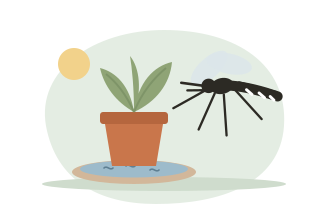
- Larvae, small wriggling 'worms', in standing water: flower-pot plates, vases, pails, roof gutters, drains, bamboo-pole holders, and water pooled on plastic sheets or in unused toilets.
- Mosquitoes around the garden, balcony or planters, particularly after rain.
- Several people in the household or office being bitten regularly.
If anyone at home has a sudden fever or other symptoms after being bitten, see a doctor. Mosquito control deals with the insects, not the illness.
Treatment options for mosquitoes
The partner firm recommends a treatment after seeing the property. These are the methods it's likely to talk you through.
Breeding-spot inspection
The firm checks everywhere water can collect, indoors and out, and removes or treats it. This matters most, because treating adult mosquitoes doesn't stop new ones hatching.
Larviciding
Where standing water can't be removed, such as in drains, gully traps and gutters, a larvicide is applied to kill the larvae before they become adults.
Residual spraying
Insecticide is applied to walls, foliage and shaded spots where adult mosquitoes rest, so they're killed when they land.
Misting and thermal fogging
A fine mist or fog of insecticide knocks down adult mosquitoes in gardens, drains and outdoor areas. It acts fast but doesn't last, so it's used alongside removing breeding spots, not instead of it.
Regular service
For landed homes with gardens and for larger premises, firms often propose a regular programme of inspection and treatment.
Ask what the firm will treat indoors and what outdoors, and how long to keep windows shut or stay out of treated areas.
What affects the price
We don't publish prices. The partner firm gives you a price after an inspection, or from what you tell it when the job is simple. These are the things it will ask about.
- The size of the property and its outdoor areas: gardens, planters, drains and roof gutters.
- How many breeding spots there are, and how hard they are to reach.
- The methods: an inspection alone, or with larviciding, residual spraying and fogging.
- Whether it's a one-off treatment or a regular service.
- Access to roof gutters, drains and other high or enclosed spots.
Comparing quotes
When you compare prices, compare what's included: the number of visits, whether follow-ups are in the price, what's treated, and what happens if the problem comes back.
How to prepare, and what happens on the day
Before the visit
- Do a round of the home first: turn over pails, empty flower-pot plates, change vase water, and clear any gutters and drains you can reach safely.
- Tell the firm about ponds, fish tanks and pets, so it can keep them clear of the treatment.
- Bring laundry, pet bowls and children's toys in from the outdoor areas to be treated.
- If outdoor fogging is planned, close windows and doors and keep people and pets indoors while it's done.
On the day
- 1 The firm inspects indoors and outdoors for breeding spots and resting places.
- 2 Breeding spots are removed, or treated with larvicide where they can't be.
- 3 Resting areas get a residual spray, and outdoor areas may be misted or fogged.
- 4 Before leaving, the firm tells you how long to stay clear of treated areas, and what to check each week to stop breeding coming back.
Afterwards
Treatment won't last if water keeps collecting. Check pails, plates, gutters and drains every week, and again after heavy rain.
Mosquitoes in homes and offices
The same pest is a different job in a flat, a landed house or an office. Here's what changes.
HDB flats
In HDB flats, the usual breeding spots are indoors and along the corridor: flower-pot plates, vases, pails, bamboo-pole holders and plants outside the door. Most flats need a thorough check for breeding spots and treatment of indoor resting places rather than fogging. The common-area drains and landscaping are the town council's to treat.
Condos
In a condo, check your balcony, planters and aircon ledge. The pools, landscaping and common drains are the management corporation's, so if mosquitoes seem to be coming from outside your unit, tell the managing agent.
Landed homes
Landed homes carry the most risk: gardens, roof gutters, drains, planters and outdoor items all collect water. Treatment usually covers the whole outdoor area, and many landed homes keep a regular programme.
Offices
Offices usually have fewer breeding spots, but pantries, indoor plants, roof areas and nearby construction can create them. If you lease the space, building management normally handles the exterior and drains, so the firm works on your unit and anything you control.
Pest control and NEA licensing
In Singapore, companies that do vector control work, which covers pests such as mosquitoes, rats and cockroaches, must be registered with the National Environment Agency (NEA) as Vector Control Operators. The people doing the work must hold NEA licences or certificates. Before work starts, you can ask the firm for its registration details and check them against NEA's list of registered operators.
Questions about mosquitoes
Does fogging get rid of mosquitoes?
Fogging knocks down adult mosquitoes quickly, but it doesn't stop new ones hatching from water nearby, and the effect wears off. It works as part of a programme that removes breeding spots, not on its own.
Is mosquito treatment safe for pets and fish?
Tell the firm about pets, fish tanks and ponds before treatment. It can avoid or cover those areas, and tell you how long to keep pets indoors.
How often is mosquito treatment needed?
It depends on the property. A flat may need only a one-off check and treatment, plus your own weekly checks, while a landed home with a garden often benefits from a regular service. The firm will suggest how often after inspecting.
Ask for a mosquito control quote
Tell us the pest, the property and roughly where it is. It takes a minute, and there's no obligation to book.
Thank you. Your enquiry is on its way.
We usually reply within one working day. We'll pass your enquiry to a partner pest-control firm, which will contact you to arrange an inspection or give you a quote.
There's nothing else you need to do. If you left something out, send another enquiry.